The short answer
Not in the way the bottles suggest. None of the studies we reviewed measured niacinamide permanently changing the structure of a pore. What the evidence does support is narrower: applied twice a day, a modest 2% niacinamide moisturiser reduced how much oil the skin produced in a placebo-controlled trial [1]. Less oil sitting in and around a pore can make it look less obvious, which is probably what most people mean when they say a serum "shrank" their pores.
So niacinamide is a reasonable choice for oily, shine-prone skin with visible pores. It is not a way to change pores you were born with, and a higher percentage on the label is not, on the evidence below, a better product.
Why pores look big in the first place
A pore is the opening of a hair follicle, and most facial ones also carry a sebaceous (oil) gland. How large and how many they look varies a great deal between people. The largest study of this we found photographed the cheeks of 2,585 women across several countries and found pore size and density differed strongly by ethnicity and levelled off with age in most groups [3]. Its authors also concluded that how big pores look to the eye is not simply a matter of how much oil the glands make [3].
That matters for expectations. Some of what you see is anatomy you cannot rub away. The part a skincare product can influence is what sits on the surface: oil, build-up, and how smooth and hydrated the skin around the pore is.
What the oil study found
The most direct evidence comes from a pair of trials of a 2% niacinamide moisturiser [1].
In Japan, 100 participants were split into two groups: half used the niacinamide moisturiser and half an identical-looking placebo, for four weeks. The niacinamide group's sebum excretion rate — how fast the skin pushes out new oil — was significantly lower at both two and four weeks [1].
In the US, 30 participants used niacinamide on one side of the face for six weeks. The amount of oil sitting on the skin (casual sebum level) fell significantly, but the excretion rate did not [1].
Two honest caveats: these are small studies, and the effect was not identical in the two groups. But the direction is consistent — less surface oil — and that is the mechanism most likely behind the "smaller pores" claim.
Two other things niacinamide does
It supports the skin barrier. In lab-grown skin cells, niacinamide increased production of ceramides and other lipids the outer layer of skin relies on; applied to skin, it raised those lipids and reduced water loss in people with dry skin [2]. A calmer, better-hydrated surface tends to look smoother, which helps pores look less pronounced.
It has the strongest evidence for tone and ageing, not pores. A 2021 review of the clinical research concluded that topical niacinamide, alone or combined with other actives, slowed signs of skin ageing and reduced hyperpigmentation in trials, and was well tolerated [4]. The same review noted there is still no convincing evidence of a single specific target in the skin it works through [4] — it seems to help skin's overall balance rather than flip one switch.
Be careful with "pore" results from combination products
You will see studies where a serum improved acne and pore appearance. One recent example tested a serum with 2% niacinamide plus lactic, salicylic and phytic acids in 46 women with mild acne; after eight weeks, acne, inflammatory spots and a pore-size measure of texture all improved [5].
That is a genuine result for that product, but it cannot tell you what niacinamide did on its own: the serum contained several exfoliating acids, and there was no placebo group — everyone knew what they were using [5]. Many Korean niacinamide serums are similar blends (zinc, acids, hyaluronic acid), so judge them as the whole formula, not by the headline percentage.
Which strength should you buy?
The controlled trial above used 2% [1], and so did the combination serum [5]. The Korean niacinamide products in our catalogue run from 5% up to 20%. In the studies we reviewed, nothing showed that 10–20% controls oil or pores better than lower strengths. A higher number mostly means a higher number.
A sensible approach: pick a formula you'll enjoy using twice a day, start with a moderate strength if your skin is reactive, and patch-test first. Give it at least four weeks — that's how long the oil effect took to show in the trial [1] — and keep wearing sunscreen, because nothing in a serum outweighs daily sun damage for how skin looks over time.
Korean niacinamide picks, price-compared
All of these are in stock with UK prices compared daily; the price shown is today's cheapest we track.
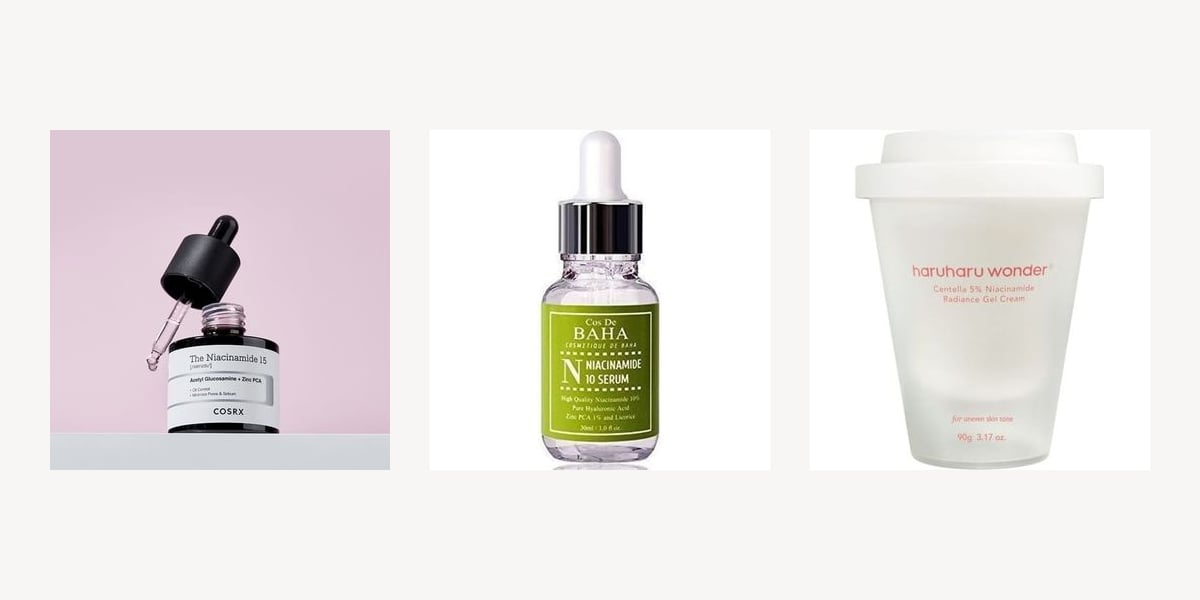
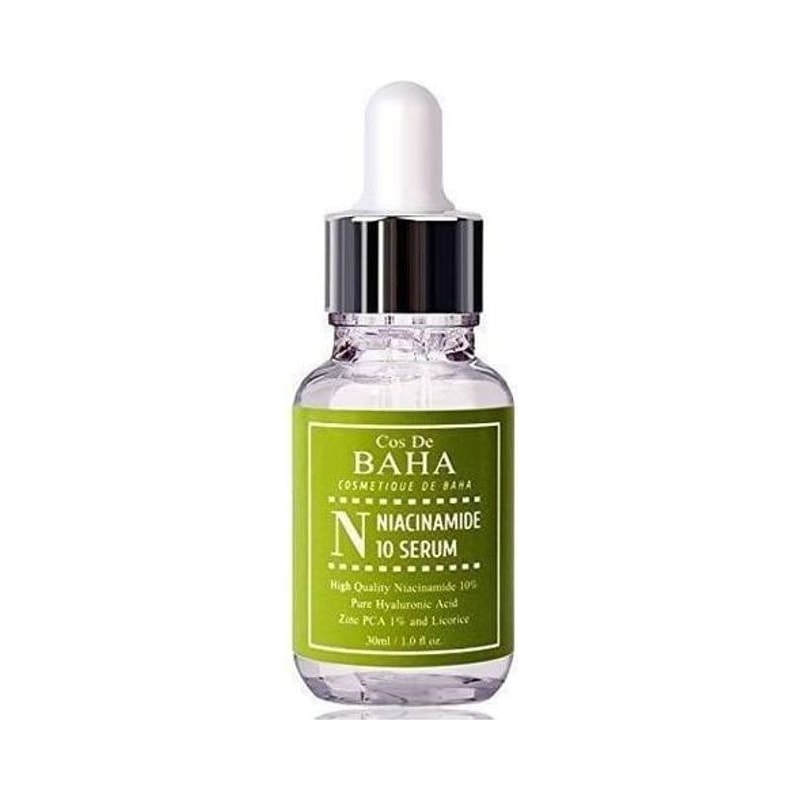
Cos De BAHA N Niacinamide 10 Serum — £8.13. A no-frills 10% serum with zinc PCA and hyaluronic acid; a straightforward, inexpensive way to try niacinamide for oily skin. kbeautymatch.co.uk/products/d0f88b24-8b7a-4b02-a7d2-a8c63b17c9db
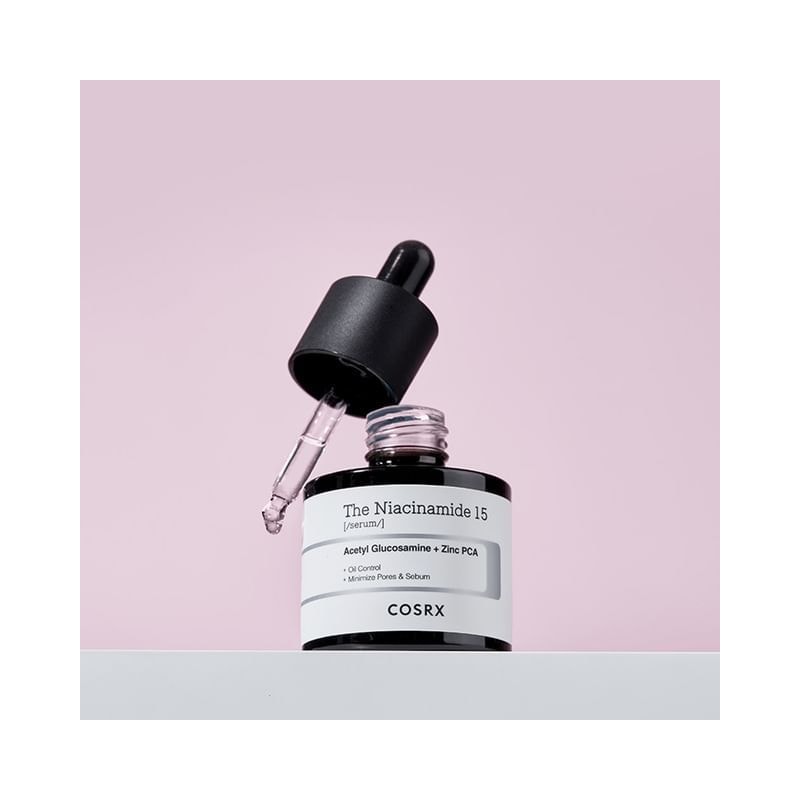
COSRX The Niacinamide 15 Serum — £10.21. 15% with zinc PCA and acetyl glucosamine, aimed at oil and the look of pores. kbeautymatch.co.uk/products/9176eaec-34b9-4af4-a54e-19cccb537ba6
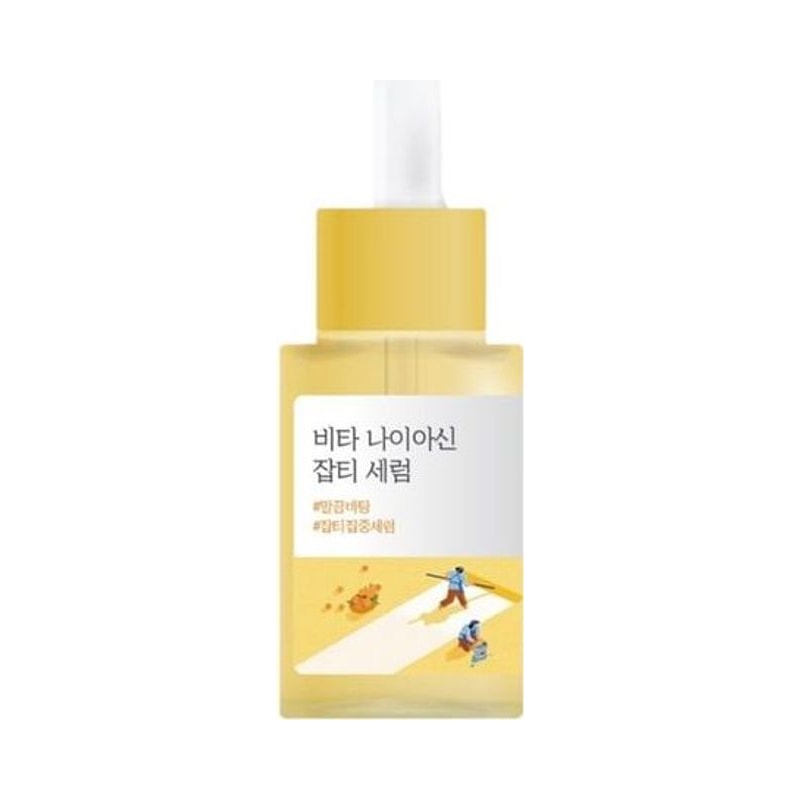
Round Lab Vita Niacinamide Dark Spot Serum — £7.43. Positioned for uneven tone, where niacinamide's evidence is strongest [4]. kbeautymatch.co.uk/products/9379377b-f3d0-4034-885d-6c1d1837704f
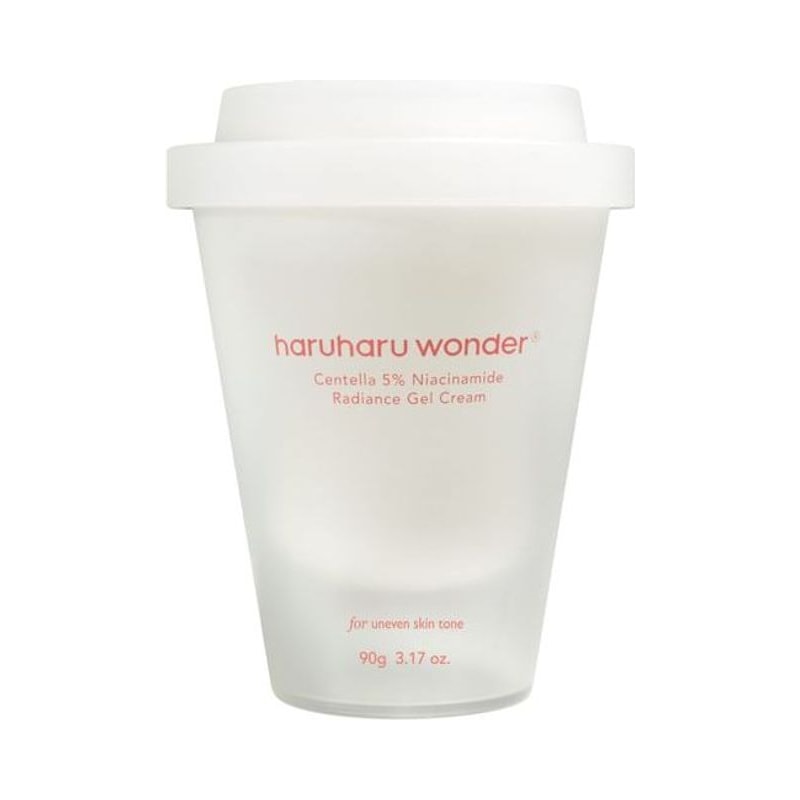
haruharu wonder Centella 5% Niacinamide Radiance Gel Cream — £16.10. If you'd rather not add a serum, a 5% gel moisturiser with centella covers the step in one product. kbeautymatch.co.uk/products/544916cf-fc7d-4a3d-a7bb-f39d5f9d1dd8
For more options ranked by skin type, see kbeautymatch.co.uk/best/serum-for-oily-skin and kbeautymatch.co.uk/ingredients/niacinamide.
Sources
- Draelos ZD, Matsubara A, Smiles K. The effect of 2% niacinamide on facial sebum production. J Cosmet Laser Ther. 2006;8(2):96-101.
- Tanno O, Ota Y, Kitamura N, Katsube T, Inoue S. Nicotinamide increases biosynthesis of ceramides as well as other stratum corneum lipids to improve the epidermal permeability barrier. Br J Dermatol. 2000;143(3):524-31.
- Flament F, Francois G, Qiu H, et al. Facial skin pores: a multiethnic study. Clin Cosmet Investig Dermatol. 2015;8:85-93.
- Boo YC. Mechanistic Basis and Clinical Evidence for the Applications of Nicotinamide (Niacinamide) to Control Skin Aging and Pigmentation. Antioxidants. 2021;10(8):1315.
- Igarashi A, Abe M, Gunji Y, et al. Evaluation of a Dermocosmetic Serum Containing a Multi-acid Complex and Niacinamide in Japanese Women with Mild Acne. J Clin Aesthet Dermatol. 2025;18(4):41-43.
Findings are summarised in our own words. Cited for information only; no source endorses KBeautyMatch or any product.
Products mentioned in this article
Find your perfect K-beauty routine
Take our free Skin Match quiz and get personalised product recommendations based on your skin type and concerns.
Take the Skin Match Quiz